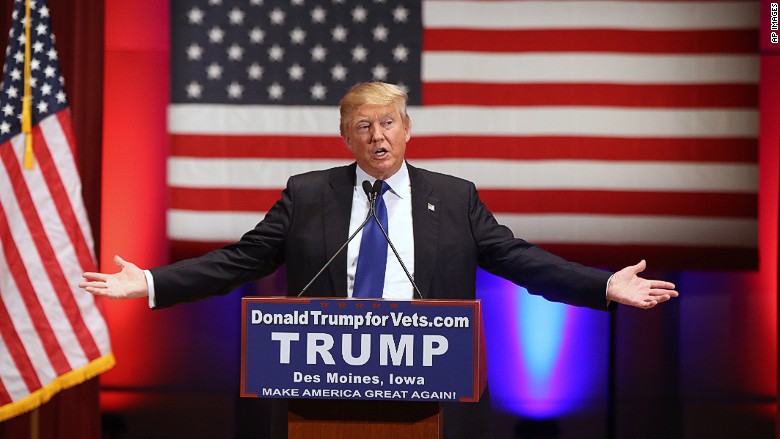
Triumphant Donald Trump elected US President, Clinton concedes - Thriller Town

Billionaire businessman caps campaign of venom, audacity and scandal with shocking win.

Round the world in home-made plane

KARACHI: It’s a bird, it’s a plane.... Well, it’s the Inspiration, a labour of love that took Hank Cheng eight years to build. On Friday afternoon, this small home-made plane on a landmark journey across the world landed in Karachi.

BILL GATES – NET WORTH, HOUSE, CAR COLLECTION, WIKI, FAMILY, PHILANTHROPY

Born on the 28th of October 1955, William Henry “Bill” Gates III is one of the wealthiest men in the world and is considered as one of the most influential people of the last century. He is an American business tycoon, investor, philanthropist, inventor, and computer programmer

Japan is sending a Talking Robot into Space

A 13.4 inch-tall humanoid robot named Kirobo will be launched into space in August. Kirobo, which has the capability to speak and carry out conversations, will join Japanese astronaut Koichi Wakada aboard the International Space Station as a conversation partner.

First Jeep Rally held in Thal Desert

MUZAFFARGARH: As many as 65 vehicles participated in the first-ever Thal Jeep Rally held in the desert area of Muzaffargarh district. Sultan Mohammad Ali won the international rally and was awarded a Rs1.5 million cash prize

Showing posts with label History&Geography. Show all posts

Monday, 7 November 2016

Iconic Buddha in Swat valley restored after nine years when Taliban defaced it FAZAL KHALIQ

Italian experts conducted the conservation and restoration process using 3-D technology.

The iconic seventh-century defaced Buddha at Jahan Abad, Swat, at last, got its face back after a nine-year-long wait following a scientific restoration process conducted by Italian archaeologists.
The 7th century Buddha seated in a meditative posture which is considered one of the largest rock sculptures in South Asia was attacked in September 2007 by the Taliban, who blew up half the statue's face by drilling holes into the face and shoulders and inserting explosives.
The explosives in the face, when detonated, destroyed half its face, but the explosives in the statue's shoulders failed to detonate.
The defacement of the Buddha sparked worldwide anger and concern among the Buddhist community, historians and archaeologists.
The defacement of the Buddha had sparked worldwide anger and concern.
The Italian Archaeological Mission in Pakistan were able to restore the statue to its original form after six scientific missions.
"It was our professional and moral obligation toward the people and heritage of Swat and Pakistan which forced us to restore the Buddha. It took about five missions of about a month each from 2012-2016 in its complete conservation program," said head of the Italian Archaeological Mission, Dr Luca Maria Olivieri, adding that international experts worked on the restoration process.
“Two restorers/trainers, two 3D scan experts/trainers, one chief restorer, five local restorers, 20 field workers, two carpenters, and three watch-keepers were involved in the restoration process, while the 3D equipment was provided all-inclusive by the University of Padua, Italy,” he said
"It was restored under the Archaeology Community Tourism (ACT) Field School project funded by Italian government, a joint project of the Directorate of Archaeology and Museums of Khyber Pakhtunkhwa and the Italian Archaeological Mission," Olivieri added.
Fabio Colombo, a restorer and member of the Italian Archaeological Mission who has vast experience in the field of conservation and who worked on-site in Bamyan, Afghanistan, said that he enjoyed the work at Jahan Abad as it was a very important historical site where the locals also gave him love and respect.
The explosives had destroyed half its face.
"It is one of the biggest rock sculptures in the region and different traces showed that it was once a central Buddhist location in the past. The surrounding of Buddha statue is peaceful, picturesque and serene. Owing to its historical, religious and archaeological importance," he told Dawn.
"I hope local people understand its value as it is one part of their history which also belongs to the entire world.”
Syed Niaz Ali Shah, an official and representative of the Archaeology department with Italian Archaeological Mission in the ACT project, said that Tibetan pilgrims who visited Swat in the past mentioned about the Jahan Abad Buddha along with a Buddhist temple here.
“Some of the highly technical and experienced Italian experts worked in the conservation and restoration process using 3-D technology for which we are thankful to them."
He said that the site would, once again, become a tourist spot as it was in the past. “I hope Buddhist visitors and other tourists will once again visit this place, not only to enjoy the area serenity but the rich cultural heritage of the region here,” Niaz Ali Shah hoped.
He said that the Buddha sculpture would play a vital role in the revival of International and national tourism.
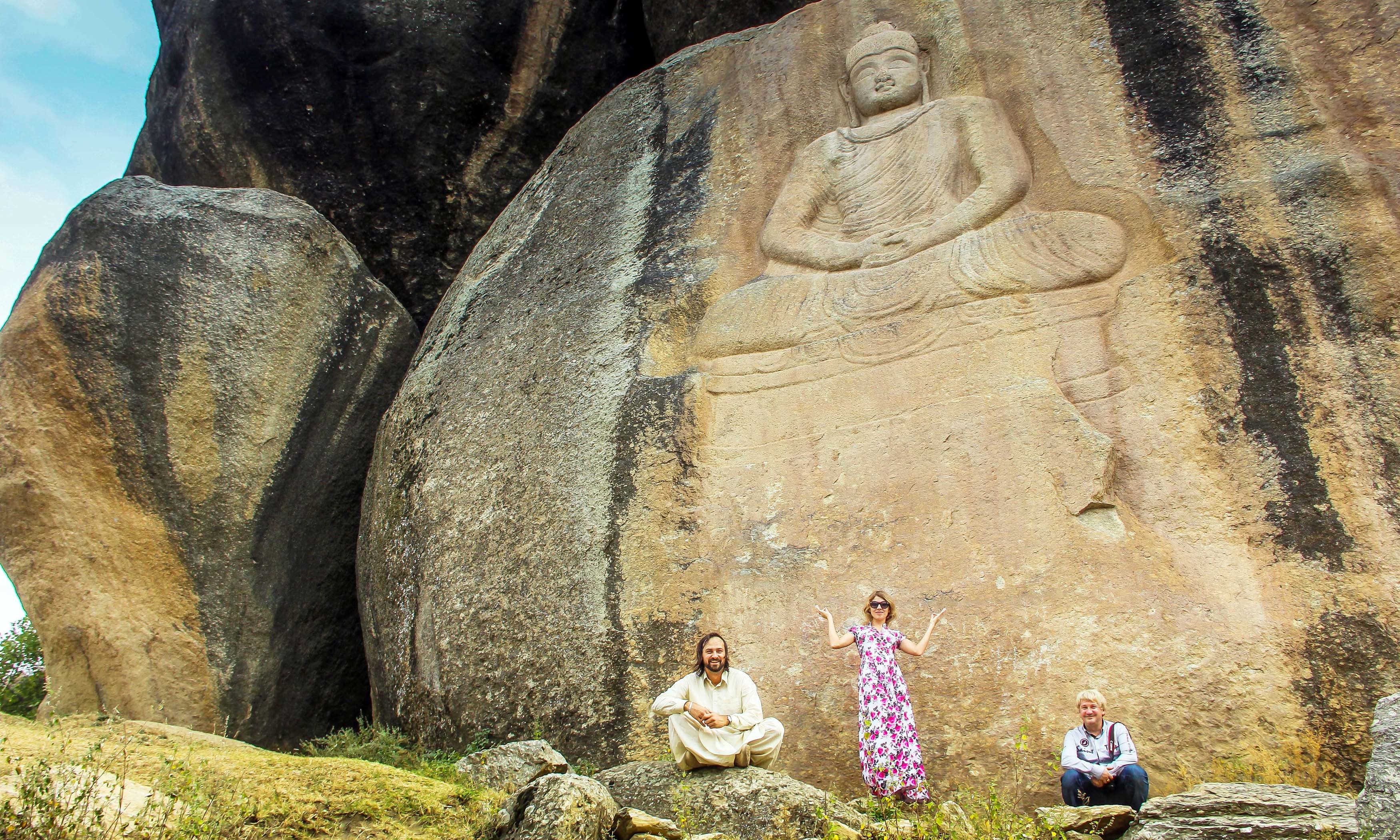
Russian tourists said they were excited to visit the iconic Buddha.
After restoration of the Buddha the first foreign delegation which visited the site was Russians, who appreciated the classic sculpture art and the scenic location.
Yury Zhorno, a Russian tourist who visited Swat valley to see Buddhist archaeological monuments and rock carvings, said he was excited to visit the iconic Buddha.
“The Buddha sculpture is really amazing not only for its history but also for its nifty carving. The view from the foot of Buddha is also amazing as Swat valley is beautiful,” he told Dawn.
He invited people from across the world who took interest in Buddhism and natural beauty and said there was no need to be afraid as there was perfect peace.
Another Russian tourist who is tour agent in Moscow and brings Russian tourists to Pakistan also liked the location of Buddha and said that it was good sign that the situation in Pakistan was improving.
“The security situation here in Swat valley is very good and when we came here so the army assisted us everywhere and we feel safe here,” he said, adding that Pakistan had huge potential for tourists with diverse landscapes and rich culture heritage and people from across the world should visit it.
Abdul Bari a resident of Gilgit Baltistan and an owner of the tourist company said Swat was the most beautiful place in Pakistan with oldest Buddhists records in form of archaeology.
“People of the valley are also hospitable so I want tourists to come here and discover all these things at the same time,” he said, adding that the government must promote tourism and attract tourists from across the world here.
NOvember 7th, 2016                                                                   DAWN News

Sunday, 6 November 2016

The Sindhi language has a Baghdadi connection, but it needs more research

Sindhi has remained  dominant in the Sindh region despite the presence of powerful languages like Persian and Arabic in the past -  Photograph by Khalid Mahmood


KARACHI: There is historical evidence about the prowess of the Sindhi language, as even when Sindh had been conquered by the Arabs, its language did not lose its potential to remain dominant in a society where powerful languages like Arabic and Persian were in vogue, said historian, writer and politician Dr Hamida Khuhro at a session of the Sindh Literature Festival (SLF) on Saturday.
The session was though specified to focus on Sindh’s history during the British Raj, Dr Khuhro delved into the subject deeply during a conversation with Dr Ayoub Shaikh who was moderating the proceedings.
She invited researchers to investigate the trails of Sindhi language spoken in Baghdad over a millennium back. “Historical evidences are there proving that Sindhi was a familiar language in Baghdad — the then seat of the Abbasid caliphate — between 8th and 12th centuries (CE), [but] what happened after that?” she questioned and asked researchers to plumb through the subject, with the emphasis on the then structure of Sindhi language with phonetics etcetera and its standard script.

“Historical evidences are there proving that Sindhi was a familiar language in Baghdad — the then seat of the Abbasid caliphate — between 8th and 12th centuries (CE), [but] what happened after that?” asked Dr Hamida

“The researchers also need to explore how influential it was in the seat of the empire which was dominated by the Arabs,” she said. However, for such researches, the first and foremost condition was to learn Arabic, she added.
Dr Khuhro was of the opinion that after the Arabs invaded and conquered Sindh, Hajjaj bin Yusuf, a governor of the Umayyad Empire, who was generally known as strict, ruthless and demanding master, asked Mohammad bin Qasim to treat the people of Sindh with the same procedures as they had specified for their subjects belonging to the People of the Book. “It was Hajjaj bin Yusuf who asked bin Qasim to treat the Sindhis as the People of the Book, which included allowances for temples and pensions for priests,” she said.
However, her claim that bin Yusuf institutionalised tolerance and liberalism in Sindh that stayed alive till date convinced fewer in the audience. The doubt was evident from the loud exclamations which were heard from the crowd.
She said the ancient city of Al-Mansoora was established by the Arabs after the conquest of Sindh that along with Baghdad had huge influence on the renaissance of Europe. “A good portion of the knowledge that the Europeans took advantage of was contributed by Mansoora in Sindh,” she said, adding that Sindh’s two Hindu doctors had treated fifth Abbasid Caliph Harun al-Rashid.
Earlier in the 4th CE, she said, Sindh was the most prosperous colony of the Persian Empire, which would pay one-third of its revenue.

Dr Hamida's claim that Hajjaj bin Yusuf institutionalised tolerance and liberalism in Sindh that stayed alive till date convinced few in the audience. The doubt was evident from the loud exclamations heard from the crowd.

She said the first exposure of Sindh to Europe was at a time when the Portuguese burnt down Thatta, the then City of Schools. The British raided Sindh much later than the rest of India, she added.
Dr Khuhro said the overall impact of the British invasion on Sindh was both positive and negative. She described the Talpurs, who had virtually divided Sindh into four princely states, as “peaceful but least efficient rulers”.
She said the British helped Sindh on economic front when Lord Curzon supported her right to water share in view of canal colonies being built in Punjab. That support later resulted in the building of Sukkur Barrage, she added.
She said the British had treaties with the Khan of Kalat promising him of independence when the British deemed it fit, but they did not have any such treaty or promise with Sindh. She rubbished the claim that the British had offered to the Sindh Assembly to pass a resolution to claim for independence. Even Balochistan was given no other option but to go for India or Pakistan, she added.
November 6th, 2016                                                           DAWN News

Friday, 4 November 2016

Bermuda Triangle Mystery finally solved?


The Bermuda Triangle, also known as the Devil's Triangle, is a loosely-defined region in the western part of the North Atlantic Ocean, where a number of aircraft and ships are said to have disappeared under mysterious circumstances. Most reputable sources dismiss the idea that there is any mystery. The vicinity of the Bermuda Triangle is one of the most heavily traveled shipping lanes in the world, with ships frequently crossing through it for ports in the Americas, Europe, and the Caribbean islands. Cruise ships and pleasure craft regularly sail through the region, and commercial and private aircraft routinely fly over it.
Popular culture has attributed various disappearances to the paranormal or activity by extraterrestrial beings. Documented evidence indicates that a significant percentage of the incidents were spurious, inaccurately reported, or embellished by later authors.

Thursday, 3 November 2016

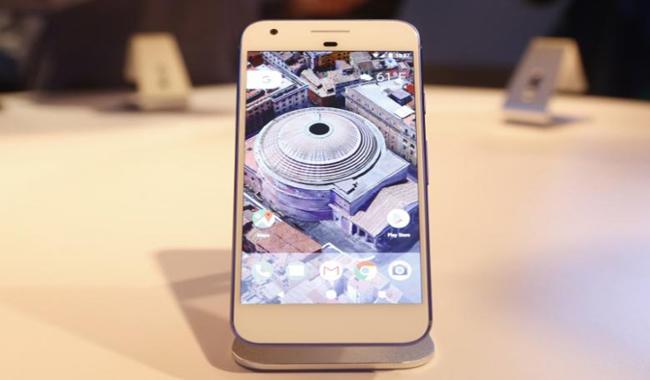
Google tries new approach with voice on Pixel phone

Google tries new approach with voice on Pixel phone

MOUNTAIN VIEW, California: About six months ago, people working on hardware and the voice-activated Google Assistant for the Pixel phone started sitting next to each other at the company's Mountain View, California headquarters, hammering out minute details of its first phone.
The new seating arrangement illustrated a much larger shift underway at Alphabet Inc's (GOOGL.O) Google, which crashed Apple Inc's (AAPL.O) smartphone revolution eight years ago by giving away its Android software and letting handset makers do the rest.
Google software now runs on 85 percent of the world's smartphones, but as voice control threatens to replace touch as the primary means of using a hand-held device, the company is experimenting with a different approach - more akin to Apple's tight integration of hardware and software.
The Pixel's hardware and Assistant teams gather for happy hour every Friday and have already received a prototype for the camera on next year's phone, said Brian Rakowski, vice president of product for Google’s Android operating system.
Their ambition: to make the company's voice-powered digital assistant better than rivals such as Apple’s Siri and Microsoft Corp’s (MSFT.O) Cortana.
“We really wanted the Assistant on the phone to feel like a natural extension of the ways you ask Google for information,” Rakowski said in an interview.
LEAF FROM APPLE'S BOOK
The fusion of hardware and software is key to that goal. Certain specifications are crucial for a high-performing assistant, such as a well-placed microphone and a powerful processor to crunch reams of data.
Creating an app isn't enough; that requires a few clicks for users to get to it.
The hardware and software teams worked closely on details such as the graphics that appear when users call up the assistant, settling on a flurry of colourful dots, which Rakowski called a "whimsical touch to give a little bit of life to the home button.”
The Assistant is always at the ready on the Pixel phone and can be summoned by pressing the home button or saying the words “OK Google.”
By integrating the Assistant into the Pixel, Google “doesn’t have to do negotiations with another handset maker – they can make it as tight as they want,” said Charles Jolley, chief executive of Ozlo, which offers a digital assistant by the same name.
To make sure users get the best possible experience, the Assistant will live only on Google products such as the Pixel, at least for now.
In the long term, however, it is unclear whether Google will keep it that way, or return to its original phone strategy and try to push the product out to the millions of smartphones running on other manufacturers' Android phones, at the risk of offering a slightly lower-quality experience.
Rakowski said making sure the Assistant works well on other phones would require a close level of integration with handset makers, beyond the typical work that happens on the Android operating system.
"We want all these features of the Assistant to work well and work quickly and be nicely integrated so it gives the right idea of what the Assistant can do," he said "We don't want it to feel limited or bolted on in any way."
He admits it could be challenging to execute the Assistant on some current Android phones.
"You can't do some of the always-on 'OK Google' detection on some phones because they don't include the right hardware to do that," he said. "In some cases, the microphone is not in a great position."
SAMSUNG GOING IT ALONE?
Whatever Google decides, there are already some signs that its Assistant may not be welcome on all Android phones.
Samsung Electronics Co (005930.KS), the world's top selling smartphone maker and the leading Android manufacturer, recently acquired Viv Labs, an artificial intelligence startup founded by the creators of Siri, and plans to weave the assistant into its phones.
Having already ceded their operating systems to Google, Android manufacturers may be reluctant to delegate the digital assistant as well, people in the industry said.
“If we get to the point where the face of the brand is the assistant itself, that is totally a differentiator,” said Babak Hodjat, co-founder of artificial intelligence company Sentient. “They will be relegated to just pushing hardware.”
Google is coy about its plans. “Over time, we want to bring the Assistant to as many people as possible,” Steve Cheng, product management director for the Assistant, said in an interview, without giving details.
Analysts expect that eventually Google will try to make money by taking a share of transactions brokered by the Assistant - such as when a user buys flowers from a store the Assistant just located.
Google Chief Executive Sundar Pichai appeared to hint at that possibility during the company’s earnings call on Thursday.
“The Assistant team talked about conversational actions as a way by which we can integrate third parties into the voice experience,” he said.
But he did make clear, whether on its own or others' hardware, the shift from touch to voice-controlled assistants presents a prime opportunity for Google.
"As we went from desktops to mobile, it’s not like one replaced the other... It expanded the pie,” he said. “I approach this the same way.”
                                                                                            thenews.com.pk/

Discovery of 49,000-year-old cave dwelling in Australia opens debate

Discovery of 49,000-year-old cave dwelling in Australia opens debate

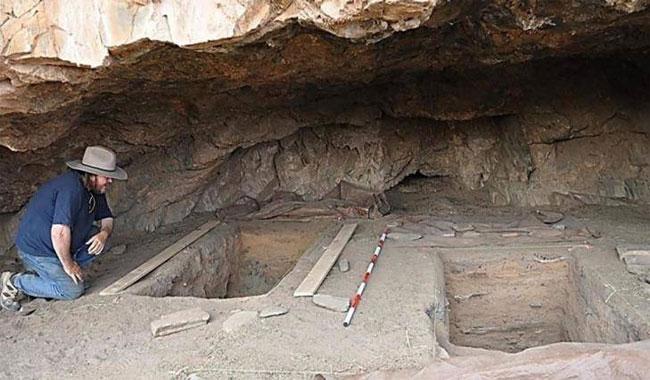
SYDNEY: The discovery of a human settlement in Australia dating back 49,000 years has challenged theories about when the world's oldest continued civilisation came to the country, the archaeologist who made the find said on Thursday.
Sophisticated tools and bone fragments from the largest ever marsupial were found in a cave high on a cliff in Flinders Ranges, in South Australia, according to archaeologist Giles Hamm.
Scientists working with Hamm's team had determined the age of the site at 49,000 years.
Aboriginal Australians are the oldest continued civilisation in the world, descending from the first people to leave Africa, according to a genetic study published by the University of Copenhagen in September.
But the time of arrival of the first Australians is debated among researchers. The consensus view has been that they had arrived 50,000 years ago.
But Hamm said their presence 49,000 years ago at a site at in southern Australia suggested they must have reached northern parts far earlier.
"If people did come 50,000 years ago, it doesn't give them much time to move so far south," said Hamm, referring to evidence of settlement 49,000 years ago.
"There could have been colonisation much earlier than the accepted time frame of 50,000 years ago. It could be 55,000 maybe 60,000 years ago."
The site also contained evidence of human interaction with mega fauna, namely the Diprotodon optatum - a marsupial measuring 2 metres in height and weighing more than 2,500 kilograms.
Scientists have previously puzzled over how humans had interacted with them. But the presence of bones from juvenile animals in a cave on a cliff suggests they had been hunted, said Gavin Prideaux, palaeontologist, at Flinders University in South Australia.
"Those animals weren't built to climb up a cliff into the settlement, the only way they could have got there was through human agency," said Prideaux.
                                                                                    thenews.com.pk/

Archaeologists set out to save relics from destruction

Remains of a Mughal-era mosque and a British-era memorial, similar to Nicholson’s Monument, found in Kuri. — Courtesy Department of Archaeology

ISLAMABAD: Archaeologists are trying the save the many surviving cultural relics scattered across Islamabad before they are lost to the developing housing societies.
Experts from the Department of Archaeology and Museums (DOAM) and the National History and Literary Division have planned to survey all the four zones of Islamabad and document and protect the relics from being destroyed.
“Several of these sites and monuments are like little wonders and are located on sites on which housing societies are being built. A survey for documenting these sites and monuments is being conducted for the first time and will help us identify these relics so that they can be protected from destruction and vandalism under the Antiquities Act 1975,” said Mohsin Haqqani, secretary National History and Literary Division.
DOAM archaeologists surveyed Kuri in Zone IV of Islamabad and came across more than just a few thousands of pottery pieces scattered around a few documented sites.
“Kuri is littered with dozens of artefacts and relics from Budhist, Muslim, Sikh and British eras,” a DOAM official said.

Remains of a Mughal-era mosque and a British-era memorial, similar to Nicholson’s Monument, found in Kuri. — Courtesy Department of Archaeology

One of the more interesting relics that were unearthed during this survey was a ten metre wide entrance to a mosque that is thought to have been built during the Mughal era and little of the entrance has survived. A walk through in the middle of a wall, buried some two meters in the ground, is the visible part of the entrance yet.
The team also found a Buddhist structure from the 6th or 7th century AD, the stone masonry on which was found to be similar to that found in the Taxila Valley. A Buddhist monastery was also found, which has been terribly damaged and possibly vandalised by villagers over the years.
Though still standing intact on a hillock but close to toppling over is an obelisk similar to that of Nicholson’s Monument on GT Road, near Taxila and the three meters of the masonry work on the structure is similar to that on Nicholson’s monument.
“The plaque inscribed with the description of the site was broken by villagers, but according to folk lore, this was the site for a battle between the locals and the British,” said a DOAM expert.
The local administration has also restored a mosque from the Mughal period, the arches and thickness of walls of which are similar to that found in other mosques from the same period across the country. A plaque near the mosque, inscribed in Persian says the mosque was finished in 1303 AD. The mosque is still used by residents of the Rahara Village.
A rock shelter and two mounds near the Chhappran Village have also been found and are believed to date back to between the second and fifth century AD.

Tuesday, 1 November 2016

The following table lists the principal rivers of the world including the name, source location, outflow, and approximate length. The Nile is the world's longest river stretching 6,690 kilometers.
(See Rivers of the United States for other U.S. rivers.)
   Approx. length
RiverSourceOutflowmi.km
NileTributaries of Lake Victoria, AfricaMediterranean Sea4,1806,690
AmazonGlacier-fed lakes, PeruAtlantic Ocean3,9126,296
Mississippi-Missouri-
 Red Rock
Source of Red Rock, MontanaGulf of Mexico3,7105,970
Chang Jiang (Yangtze)Tibetan plateau, ChinaChina Sea3,6025,797
ObAltai Mts., RussiaGulf of Ob3,4595,567
Huang He (Yellow)Eastern part of Kunlan Mts., West ChinaGulf of Chihli2,9004,667
YeniseiTannu-Ola Mts., western Tuva, RussiaArctic Ocean2,8004,506
ParanáConfluence of Paranaiba and Grande riversRío de la Plata2,7954,498
IrtishAltai Mts., RussiaOb River2,7584,438
Zaire (Congo)Confluence of Lualab and Luapula rivers, CongoAtlantic Ocean2,7164,371
Heilong (Amur)Confluence of Shilka (Russia) and Argun (Manchuria) riversTatar Strait2,7044,352
LenaBaikal Mts., RussiaArctic Ocean2,6524,268
MackenzieHead of Finlay River, British Columbia, CanadaBeaufort Sea
 (Arctic Ocean)
2,6354,241
NigerGuineaGulf of Guinea2,6004,184
MekongTibetan highlandsSouth China Sea2,5004,023
MississippiLake Itasca, MinnesotaGulf of Mexico2,3483,779
MissouriConfluence of Jefferson, Gallatin, and Madison rivers, MontanaMississippi River2,3153,726
VolgaValdai plateau, RussiaCaspian Sea2,2913,687
MadeiraConfluence of Beni and Maumoré rivers, Bolivia–Brazil boundaryAmazon River2,0123,238
PurusPeruvian AndesAmazon River1,9933,207
São FranciscoSouthwest Minas Gerais, BrazilAtlantic Ocean1,9873,198
YukonJunction of Lewes and Pelly rivers, Yukon Territory, CanadaBering Sea1,9793,185
St. LawrenceLake OntarioGulf of St. Lawrence1,9003,058
Rio GrandeSan Juan Mts., ColoradoGulf of Mexico1,8853,034
BrahmaputraHimalayasGanges River1,8002,897
IndusHimalayasArabian Sea1,8002,897
DanubeBlack Forest, GermanyBlack Sea1,7662,842
EuphratesConfluence of Murat Nehri and Kara Su rivers, TurkeyShatt-al-Arab1,7392,799
DarlingCentral part of Eastern Highlands, AustraliaMurray River1,7022,739
Zambezi11°21'S, 24°22'E, ZambiaMozambique Channel1,7002,736
TocantinsGoiás, BrazilPará River1,6772,699
MurrayAustralian Alps, New South WalesIndian Ocean1,6092,589
NelsonHead of Bow River, western Alberta, CanadaHudson Bay1,6002,575
ParaguayMato Grosso, BrazilParaná River1,5842,549
UralSouthern Ural Mts., RussiaCaspian Sea1,5742,533
GangesHimalayasBay of Bengal1,5572,506
Amu Darya (Oxus)Nicholas Range, Pamir Mts., TurkmenistanAral Sea1,5002,414
JapuráAndes, ColombiaAmazon River1,5002,414
SalweenTibet, south of Kunlun Mts.Gulf of Martaban1,5002,414
ArkansasCentral ColoradoMississippi River1,4592,348
ColoradoGrand County, ColoradoGulf of California1,4502,333
DnieperValdai Hills, RussiaBlack Sea1,4192,284
Ohio-AlleghenyPotter County, PennsylvaniaMississippi River1,3062,102
IrrawaddyConfluence of Nmai and Mali rivers, northeast BurmaBay of Bengal1,3002,092
OrangeLesothoAtlantic Ocean1,3002,092
OrinocoSerra Parima Mts., VenezuelaAtlantic Ocean1,2812,062
PilcomayoAndes Mts., BoliviaParaguay River1,2421,999
Xi Jiang (Si Kiang)Eastern Yunnan Province, ChinaChina Sea1,2361,989
ColumbiaColumbia Lake, British Columbia, CanadaPacific Ocean1,2321,983
DonTula, RussiaSea of Azov1,2231,968
SungariChina–North Korea boundaryAmur River1,2151,955
SaskatchewanCanadian Rocky Mts.Lake Winnipeg1,2051,939
PeaceStikine Mts., British Columbia, CanadaGreat Slave River1,1951,923
TigrisTaurus Mts., TurkeyShatt-al-Arab1,1801,899
                                                         http://www.factmonster.com/